
Bring You Home
Alike StudioPuzzle
4.678.00 Reviews
- Version
- Varies With Device
- Installs
- 50.00K
- Age Rating
- Everyone
Screenshots
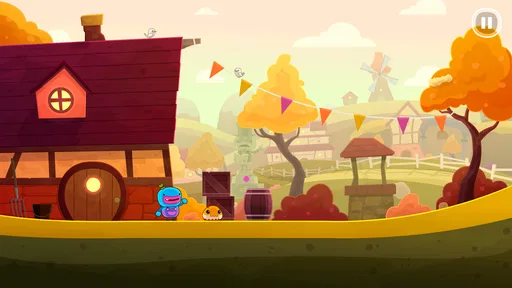
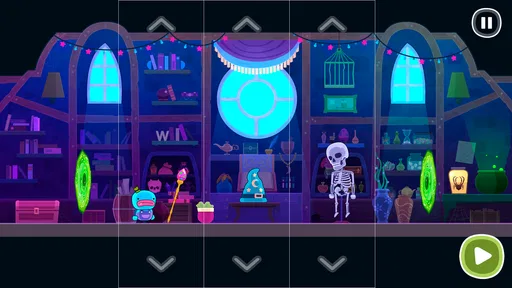
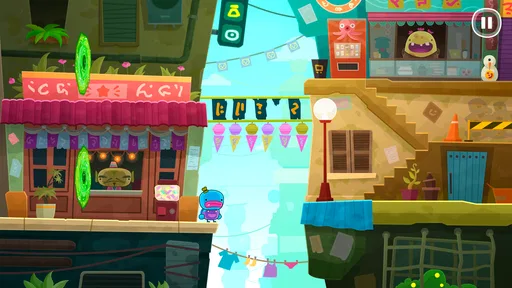
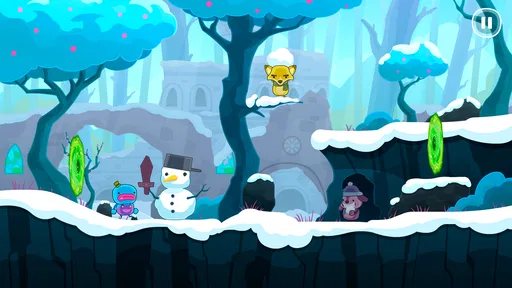
Our Review of Bring You Home
 Analysis by Appyee
I like puzzle games that make me rethink what “solving” a level means, and Bring You Home is at its best when it turns that expectation into playful experimentation. Rather than steering its hero through a scene in the usual way, I’m asked to change the scene around him and see what follows. That gives this adventure a distinct personality: it is less about mastering quick controls and more about noticing possibilities, accepting a few comic failures, and trying a different arrangement.
A puzzle adventure built around changing the scene
That central idea makes the game approachable, but not entirely effortless. A scene can appear to have an obvious solution, only for the outcome to reveal that I missed a small detail or made the wrong assumption. The useful habit is to treat a failed attempt as information: watch what the character does, identify the moment the plan stops working, then adjust one part rather than changing everything at once. That makes experimentation feel purposeful instead of random.
It also shapes the pace. This is a good fit for a short break when I want a self-contained challenge and a bit of visual storytelling, not a long session of complex menus or elaborate strategy. I can focus on the scene in front of me, test an idea, and decide whether to continue. If you prefer puzzles that demand careful deduction but don’t rely on fast reactions, that distinction is worth considering before you buy.
What the comic missteps add
The humor is more than decoration. Unexpected outcomes make it easier to stay curious when my first guess is wrong, and they encourage me to explore alternatives instead of treating every mistake as a setback. For younger players, or anyone who finds stern, abstract puzzle games tiring, that lighter feedback can make trial and error feel inviting. The appeal is not simply reaching the next scene; it is seeing how a choice changes the little story playing out.
There is a trade-off, though. Players who want a clearly signposted logic puzzle may find the experimentation less satisfying, especially if they prefer to infer a solution from clues before acting. Here, observation and trying possibilities are part of the process. I’d approach a stubborn scene by changing only one environmental choice at a time, so it’s easier to understand which adjustment altered the outcome. That small method helps keep the puzzle readable without taking away the surprise.
Where it fits among puzzle games
Compared with familiar match-and-clear puzzles, word games, or grid-based brain teasers, this is a more story-led and animated experience. Those alternatives are often better when I want a repeatable score chase or a quick puzzle I can play almost on autopilot. This one is more appealing when I want to watch a character move through a visual situation and have my decisions reshape what happens. It occupies a narrower lane, but its unusual interaction is also the reason to choose it.
It is also different from a conventional platform game: the pleasure here comes from setting up the conditions for Polo’s progress, not from practicing precise movement. That makes it easier to recommend to someone who enjoys playful problem-solving but doesn’t want a test of reflexes. On the other hand, if you mainly want direct control, action, or an endless supply of randomly generated challenges, a different genre will probably suit you better.
Who I’d recommend it to
I’d suggest it to players who enjoy animated comedy, visual puzzles, and stories told through small actions rather than lengthy explanations. It can work well as a shared couch-side game, too: one person can propose an arrangement while another predicts what might go wrong, then you can watch the result together. That makes the trial-and-error structure a conversation starter instead of a solitary guessing exercise.
For a realistic everyday use, picture having a little time to unwind after dinner. You can open the game, focus on one scene, and decide whether you have the patience to experiment with another. It is less suitable for a commute where you need to keep your attention on your surroundings, or for someone who dislikes paying for a game before knowing whether its particular puzzle style clicks. The price is $3.49, so I’d make the purchase based on the distinctive scene-manipulation idea rather than expecting a broad collection of puzzle formats.
Parents may also appreciate that its content rating is Everyone, while still deciding whether its trial-and-error approach matches the child’s temperament. A patient child who enjoys animated stories may find the surprises motivating; a player who gets frustrated when an answer takes several attempts may be happier with puzzles that give more explicit clues. The age rating is a useful starting point, not a guarantee that every player will enjoy the same style.
Small habits that make the puzzles clearer
One practical tip is to watch the whole result of an attempt before tapping through or trying to fix it. The order of events can show whether the problem was the first choice or something that only goes wrong later. I also find it useful to remember what has already been tested, even briefly; repeating a failed arrangement without changing anything rarely teaches much. These habits make the game feel more like a series of observations than a lottery of taps.
Another useful approach is to distinguish between a funny failure and a genuinely promising route. If the scene produces a new reaction, that attempt has given you a clue, even if it did not get Polo where he needs to go. If the outcome looks identical to an earlier one, reconsider the assumption behind the setup rather than making several random changes. That’s a modest but meaningful way to reduce frustration while preserving the game’s playful discovery.
There is a boundary to that advice: if you want every puzzle to have a single elegant deduction you can solve without experimenting, this may not be your preferred kind of challenge. Its appeal depends on being willing to test a possibility and learn from the animation. I would not recommend it as a substitute for a deep logic game; I’d choose it for a lighter, more characterful change of pace.
Setting the Scene
Imagine a world where every step is a new puzzle and every scene is a colorful, animated storybook. That’s the magic of Bring You Home. The game kicks off with our hero, Polo, whose pet has been mysteriously kidnapped. Our mission? Help Polo navigate through various worlds to rescue his fluffy friend.
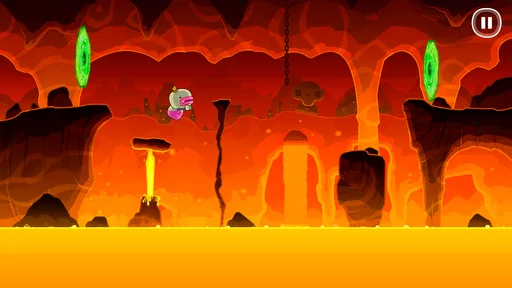
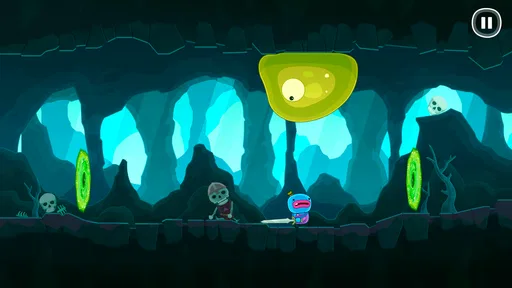
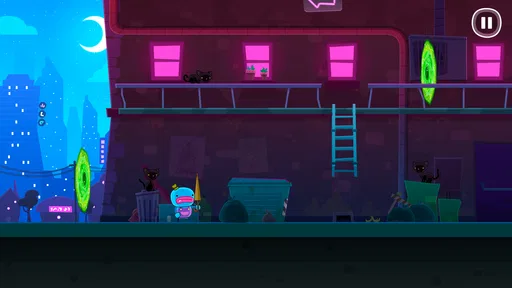
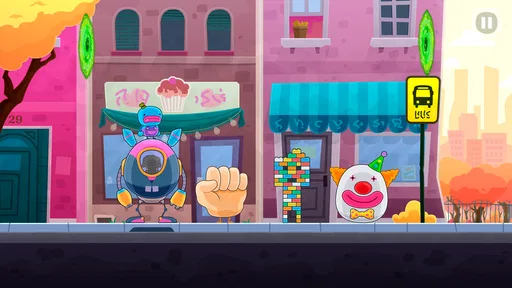
The game’s visual style is like a Saturday morning cartoon come to life. It’s vibrant, charming, and full of personality. The developers have crafted each level with meticulous detail, ensuring that players are always engaged and entertained.
The Gameplay Experience
At its core, Bring You Home is a puzzle game, but it’s not your typical brain-buster. It’s more about trial and error, exploration, and a bit of quirky logic. Each scene presents a challenge where you must rearrange parts of the environment to help Polo progress.
What makes this game stand out is its intuitive design. You don’t control Polo directly. Instead, you manipulate the environment, and Polo reacts to the changes. It’s like watching a charming, interactive animation where your choices shape the outcome. This gameplay mechanic is both refreshing and engaging, allowing players to explore different solutions creatively.
Charming Challenges and Surprises
One of the most delightful aspects of Bring You Home is its unpredictability. You never know what’s going to happen when you make a change. Sometimes, what seems like a logical choice results in hilariously unexpected outcomes, adding a layer of humor that’s rare in puzzle games.
The levels are diverse, each with its unique theme and challenges. From lush forests to icy landscapes, every scene is a new adventure. The game does an excellent job of keeping things fresh, ensuring that you’re never bored as you progress through Polo’s journey.
Audio and Visual Delight
The artwork in Bring You Home is simply stunning. The developers have put a lot of love into crafting a world that’s not only visually appealing but also full of life and character. The animations are smooth, and the attention to detail is impressive.
Accompanying the beautiful visuals is a delightful soundtrack that perfectly complements the game’s whimsical nature. The music is lighthearted and adds to the overall charm, making the entire experience even more immersive.
A Heartfelt Conclusion
As Polo’s adventure unfolds, you can’t help but feel a connection to the adorable protagonist. The game’s storyline, though simple, is heartfelt and touching. It’s a reminder of the power of friendship and the lengths we’ll go to for those we care about.
In the end, Bring You Home is more than just a puzzle game. It’s an experience filled with laughter, surprises, and a touch of nostalgia. Whether you’re a seasoned gamer or just looking for something to brighten your day, this game is a joy to play.
So, if you’re ready to join Polo on his quest and immerse yourself in a world of whimsy and wonder, don’t hesitate to give Bring You Home a try. It’s a delightful escape that’s sure to warm your heart and challenge your mind.
How I’d weigh the purchase
Alike Studio made a puzzle adventure with a clear identity, and that matters more to me than having a little of every puzzle style in one package. The game has an average rating of 4.6 from around 700 ratings, with more than 50,000 installs. Those figures suggest it has found an audience, but the more useful question is whether its particular rhythm suits you: watch, choose, observe the consequence, and revise your idea.
It was released on June 20, 2019, and is a paid game rather than a free download. That makes the decision straightforward in one sense: there is no need to judge it by a free-to-play loop, but you should be comfortable paying for a focused experience. If you usually sample games only when they cost nothing, waiting for a purchase to feel worthwhile may be sensible; if you value a compact, authored adventure, the upfront price can make more sense than a game built around repeatable daily tasks.
The game has 64 written reviews, but I wouldn’t use a review count as a substitute for matching the play style to your own. The clearest reason to try it is the unusual way you influence the action without controlling Polo directly. The clearest reason to pass is equally specific: if repeated attempts feel like guesswork to you, the comic surprises may not compensate for that friction.
A final word on its audience
For me, the strongest recommendation is to curious players who enjoy seeing a visual joke unfold and don’t mind learning by testing an idea. It can suit a relaxed solo session, a parent and child taking turns suggesting choices, or a casual player who wants a story-shaped break from more mechanical puzzles. It is a less convincing pick for competitive players, people looking for a long-term score chase, or anyone who wants precise character control.
Bring You Home earns its place through the relationship between its puzzles and its animated scenes. I’d choose it when I want a warm, mischievous adventure that rewards attention and flexibility, not when I’m craving a sprawling logic challenge. If that distinction sounds appealing, Polo’s journey is an easy one to recommend; if it doesn’t, a conventional puzzle game will likely be a better fit.
Verdict
Strengths of Bring You Home
- Unique and engaging puzzle mechanics.
- Charming and colorful graphics.
- Simple controls, easy to learn.
- No in-app purchases or ads.
- Suitable for all age groups.
Limitations of Bring You Home
- Limited replay value after completion.
- Some puzzles can feel repetitive.
- Short gameplay duration.
- Lack of difficulty settings.
- Storyline is quite simplistic.
Similar Picks in This Category
View All
Block Blast!
HungryStudio4.8

Braindom: Brain Games Test
Lahana Game Studio4.6

AMAZE!
CrazyLabs LTD4.6

Sudoku - Classic Sudoku Puzzle
Oakever Games4.7

Art Puzzle - Puzzle Games
Easybrain4.8

Amaze GO!
Oakever Games4.9
Frequently Asked Questions
What is the main objective of Bring You Home?
Bring You Home is a unique puzzle adventure game that challenges players to help Polo, a determined hero, find his way through various levels to rescue his kidnapped pet. The game focuses on altering the environment to solve puzzles, emphasizing creativity and lateral thinking to progress through its charming and colorful worlds.
Is Bring You Home suitable for all ages?
Yes, Bring You Home is designed to be family-friendly and accessible to players of all ages. Its simple controls, coupled with non-violent gameplay and delightful graphics, make it an excellent choice for both younger audiences and adults looking for a light-hearted puzzle experience.
What platforms is Bring You Home available on?
Bring You Home is available on both Android and iOS platforms. Players can download it from the Google Play Store or Apple App Store. The game is optimized for mobile devices, ensuring a smooth experience across a variety of smartphones and tablets.
Does Bring You Home require an internet connection to play?
No, Bring You Home does not require an internet connection to play. This makes it perfect for gaming on the go, whether you’re commuting, traveling, or simply without access to Wi-Fi. You can enjoy the adventure without worrying about connectivity issues.
Are there any in-app purchases or ads in Bring You Home?
Bring You Home is a premium game, meaning you pay once to download the app, and there are no in-app purchases or ads. This ensures an uninterrupted, ad-free experience, allowing players to fully immerse themselves in Polo's adventure without distractions.
Play our best games!


